Chain Abstraction vs Messaging: Developer Guide
Jul 6, 2026
ZetaChain Team
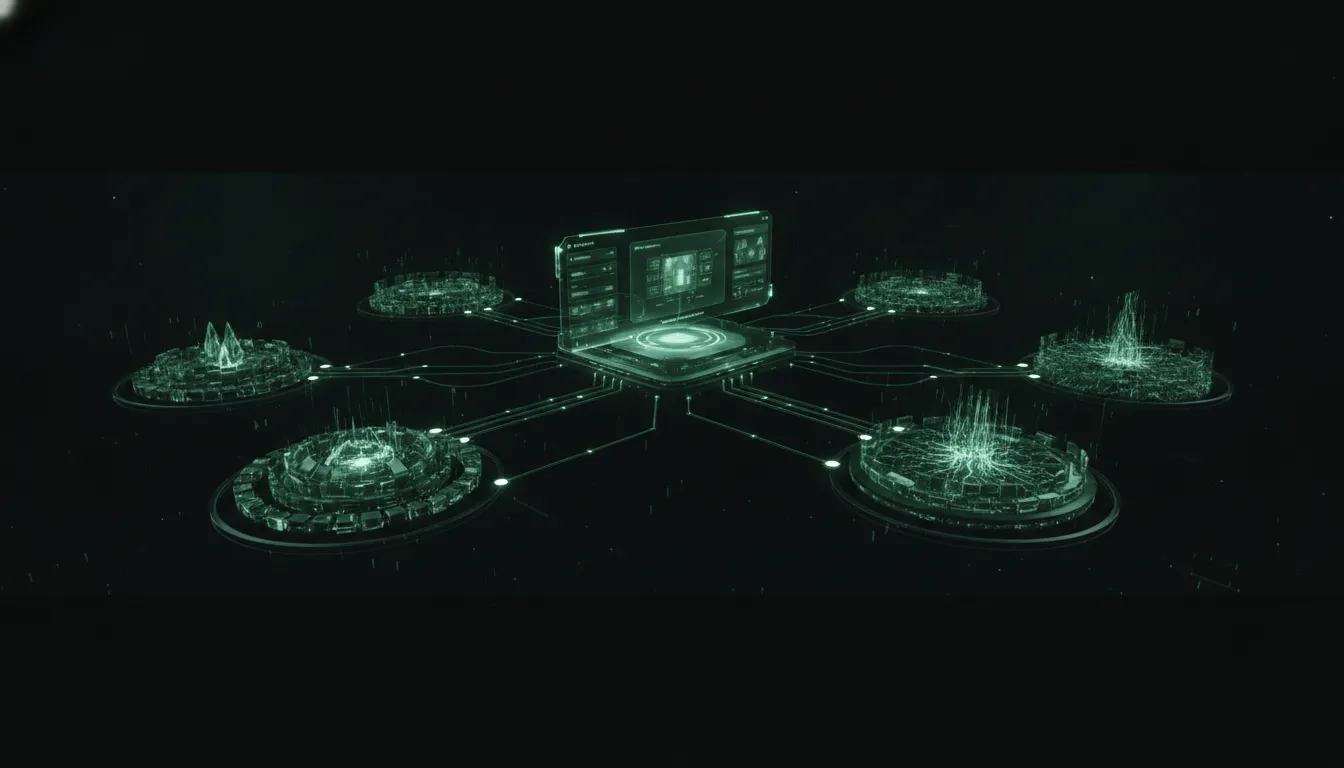
Developers evaluating interoperability infrastructure need to distinguish a transport mechanism from a complete application architecture. Messaging can deliver authenticated data between execution environments. Chain abstraction coordinates messaging with accounts, liquidity, gas, routing, execution, and recovery so an application can expose one coherent interface.
Start Building with ZetaChain documentation
Chain abstraction is an application design approach that removes network-specific decisions from the user journey. Messaging is one lower-level component: it transports authenticated payloads or requests. A chain-abstracted application also decides where to execute, how to source assets and gas, which trust assumptions apply, and what happens when part of a transaction fails.
The distinction matters because successful message delivery does not guarantee successful application execution. A message can be valid while the destination call reverts, liquidity is unavailable, gas estimation is wrong, or the requested state has changed. Developers therefore need to evaluate the entire state transition, not only the transport path.
Chain abstraction vs messaging: the architectural boundary
Messaging answers a narrow protocol question: how can one execution environment transmit verifiable information to another? Chain abstraction answers a broader product and systems question: how can an application produce a predictable outcome without making the user coordinate each underlying network?
A messaging protocol commonly includes a source-side contract or program, an observation or verification mechanism, a delivery path, and a destination-side receiver. Its responsibility ends after delivering a payload according to its verification rules. The destination application still owns authorization, replay protection, idempotency, execution, and recovery.
A chain-abstraction layer composes those transport primitives with application-facing services. These may include a unified account model, intent capture, route selection, fee payment, liquidity access, execution orchestration, and status reporting. The abstraction is only credible when it preserves the security properties developers require and exposes failures that operators can diagnose.
Architecture concern | Messaging layer | Chain-abstraction layer |
|---|---|---|
Primary responsibility | Authenticate and deliver a payload | Produce an application outcome through a unified interface |
Developer input | Source, destination, payload, receiver | User intent, constraints, authorization, recovery policy |
Execution scope | Transport and verification | Routing, gas, liquidity, execution, settlement, recovery |
Failure model | Delivery delayed, invalid, or unavailable | Any transport, routing, pricing, execution, or settlement failure |
User exposure | Often network-aware | Network decisions can remain behind the application interface |
Security review | Verifier and delivery trust model | End-to-end trust model across every composed component |
This boundary also explains why messaging and chain abstraction are complementary rather than competing approaches. A developer may use messaging directly when explicit control is desirable. The same developer may choose a higher-level abstraction when reducing integration surface and user coordination is more important.
What does a messaging layer actually guarantee?
A messaging layer guarantees only what its protocol specification and trust model define. Developers should identify who observes the source event, how observations reach consensus, what constitutes finality, who can deliver the message, and how the destination verifies it. Those answers determine whether the delivered payload is acceptable to the receiving application.
Observation, verification, and delivery
The first stage is observation. A protocol watches a source network for an event or transaction. It must account for the source network's finality rules before treating that event as stable. The next stage is verification, where validators, light clients, external committees, or another mechanism attest that the source event occurred. Delivery then submits the verified payload to the destination environment.
ZetaChain uses a purpose-built Layer 1 with a consensus layer, observers that monitor connected networks, and distributed Threshold Signature Scheme signers for outbound execution. This architecture gives developers a common coordination layer rather than requiring a bespoke point-to-point integration for every environment. The first-principles interoperability overview provides additional architectural context.
What remains application responsibility
Delivery is not equivalent to safe execution. The receiving contract must validate the message context, authenticate expected callers, reject replays, constrain callable functions, and handle malformed or stale payloads. It also needs a policy for duplicate delivery and partial completion. These concerns should be explicit in code and tests rather than assumed to be properties of the transport.
Applications should also model asynchronous behavior. The source request and destination execution do not occur atomically across independent environments. State can change between observation and execution. A swap can exceed its slippage bound, a position can become unhealthy, or a contract can pause. Robust receivers treat these outcomes as expected branches, not exceptional surprises.
Developers can inspect ZetaChain's Solidity-compatible environment and connected execution model in the zEVM developer documentation. The broader documentation portal covers the tools needed to prototype and test application flows.
What does chain abstraction remove from the user journey?
Chain abstraction removes decisions that are implementation details rather than user goals. A user usually wants to deposit collateral, exchange an asset, purchase an item, or authorize an agent. They rarely want to select a transport route, acquire a network-specific fee asset, or monitor several independent transactions.
Network and account coordination
A chain-abstracted interface can accept a goal and determine which connected environment should participate. The application may resolve account context, permissions, and available balances without presenting a sequence of network selectors. This does not eliminate the underlying networks. It moves their coordination into software that developers can reason about and users can authorize.
Gas, liquidity, and route selection
Execution often requires more than moving a payload. The route may need liquidity, price constraints, and a way to pay fees. An abstraction layer can evaluate those requirements before execution and select a viable route. Developers still need to define acceptable slippage, maximum fees, route preferences, and fallback behavior. Hiding these decisions from users should not mean hiding them from operators or security reviewers.
Status and recovery
A coherent interface also needs a coherent transaction state machine. Instead of showing unrelated transaction hashes, the application can represent a user request as pending, observed, executing, settled, reverted, or recoverable. This model is especially important when execution spans systems with different finality and confirmation behavior.
The practical test is simple: can the application explain the current state and the next safe action after every expected failure? If not, the interface has hidden complexity without actually managing it.
How to design a chain-abstracted application flow

A strong design begins with explicit intent and ends with verifiable settlement. Each stage needs bounded permissions, observable state, and a recovery path. The following sequence is a useful starting point for architecture reviews.
Capture a constrained intent.
Define the user's desired outcome, deadline, acceptable fees, asset limits, and authorization scope. Avoid open-ended signatures that permit an executor to substitute materially different actions.
Resolve state and prerequisites.
Determine account context, balances, allowances, liquidity, fee requirements, and the relevant finality assumptions before committing to a route.
Select and quote a route.
Compare available execution paths against the user's constraints. Bind important quote parameters to the authorization so they cannot change silently.
Submit and observe.
Initiate the request, track source confirmation, and expose a durable request identifier that maps to every subsequent stage.
Verify and execute.
Authenticate the observed event, enforce replay protection, and execute only the functions and asset movements permitted by the user's authorization.
Settle or recover.
Confirm the final outcome. If execution cannot complete, invoke a documented revert or recovery path rather than leaving funds or state ambiguous.
Design for idempotency
Every asynchronous handler should be safe to retry. Store a unique request identifier and reject or safely ignore duplicate execution. If a handler performs several state changes, order them so an interruption cannot leave the application in an unrecoverable intermediate state. Tests should include duplicated, delayed, reordered, and invalid messages.
Make observability part of the interface
Emit events for each state transition and index them into operator tooling. Record the selected route, quoted limits, observed source event, execution result, and recovery action. Users may see a simple status, but developers need enough context to diagnose where a request stopped and why.
ZetaChain's Universal Apps overview describes the build-once application model. Teams ready to prototype can move from architecture to implementation through the Start Building documentation.
When should developers use messaging directly?
Direct messaging is appropriate when the application needs a narrow, explicit communication path and the team wants to own the destination logic. It can be a good fit for state synchronization, governance signals, oracle-like updates, or tightly scoped contract calls where network-specific behavior is part of the product.
Choose direct messaging when your team can maintain each receiver, monitor every route, and implement recovery for each operation. This approach preserves control and can reduce unnecessary abstraction. It also expands the application-owned attack surface and operational burden as the number of connected environments grows.
Questions for a messaging architecture review
What exact event or proof causes the destination contract to accept a message?
Which actors can delay, censor, reorder, or forge delivery?
How does the receiver prevent replay and unauthorized calls?
What happens if source state is final but destination execution fails?
Can operators trace a request from source event through destination result?
How are upgrades handled for sender, verifier, relayer, and receiver components?
Do not describe the protocol as secure based only on successful delivery in a happy-path test. Security depends on the verification model, contract permissions, upgrade controls, and recovery behavior together.
When should developers choose chain abstraction?
Choose chain abstraction when network choice is not central to the product and users benefit from a single goal-oriented interaction. It is particularly useful when an application must coordinate accounts, assets, and execution across several connected environments without forcing users to assemble that workflow themselves.
The trade-off is composition risk. A higher-level interface may depend on routing, liquidity, signing, verification, and settlement components. Developers must understand the trust and failure assumptions behind each one. Abstraction should reduce user coordination while preserving developer visibility.
Evaluate the complete trust model
Map every privileged actor and upgrade authority. Identify which components can move assets, change routes, pause execution, or alter verification rules. Smart contracts may use upgradeable proxy patterns, so reviewers should inspect governance and upgrade controls rather than assuming deployed code can never change.
Evaluate operational failure modes
Test destination reverts, unavailable liquidity, stale quotes, delayed observations, insufficient gas, paused contracts, and duplicate deliveries. Verify that each failure produces a deterministic state and a documented recovery action. A clean interface during normal execution is not enough.
Evaluate developer leverage
Compare the cost of maintaining network-specific adapters with the cost of integrating and auditing the abstraction layer. The right choice should reduce undifferentiated infrastructure work while keeping critical application logic under clear ownership. ZetaChain's solutions overview and ecosystem can help teams evaluate the available platform and integrations.
How ZetaChain implements the abstraction layer
ZetaChain provides a Layer-1 coordination and execution environment for Universal Apps. A Universal App can be deployed on the zEVM and interact with assets and calls from connected networks. The architecture combines consensus, observation, distributed signing, gateway contracts, and standardized asset representations.
Consensus and observation
ZetaCore coordinates consensus and state. Observers monitor relevant activity on connected networks and report observations for consensus. This provides a common verification process for applications using the platform. Developers should still define application-level authorization and validation for every accepted call.
Distributed outbound execution
Threshold Signature Scheme signers collaboratively authorize outbound transactions without reconstructing a complete private key at one node. This enables native interaction with environments such as Bitcoin, where general-purpose smart contracts are not available. The distributed signing model is a protocol capability, not a substitute for secure application logic.
Universal Apps and zEVM
The zEVM gives Solidity developers an EVM-compatible execution environment for Universal Apps. Gateway contracts provide standardized entry points for inbound and outbound interactions, including handling for failed operations. This lets developers centralize application logic instead of deploying and maintaining a full application stack in every connected environment.
Read the zEVM documentation before selecting contract boundaries and the Universal Apps guide for the product model. Teams building a differentiated application can also review the ZetaChain grants program.
What should you verify before production?
Production readiness requires more than a successful testnet transaction. Teams should document their security assumptions, enumerate expected failures, and prove that monitoring and recovery work under realistic conditions.
Authorization:
Bind user approvals to specific assets, limits, deadlines, routes, and callable functions.
Replay protection:
Ensure every request has a unique identifier and cannot execute twice.
Finality:
Define when source events are accepted and how reorganizations are handled.
Failure handling:
Test destination reverts, delayed delivery, missing liquidity, and insufficient gas.
Upgrade controls:
Review proxy administrators, governance thresholds, pause controls, and timelocks.
Observability:
Trace every user request through observation, verification, execution, and recovery.
Economic constraints:
Enforce maximum fees, slippage bounds, quote expiry, and liquidity requirements.
Incident response:
Define who can pause components, how users recover, and how state is reconciled.
Use local and test environments to simulate adverse conditions, not only expected behavior. The ZetaChain docs are the starting point for implementation details and current tooling.
Frequently asked questions about chain abstraction
Is chain abstraction the same as account abstraction?
No. Account abstraction changes how accounts authorize and execute operations, often enabling programmable validation, batching, or fee sponsorship. Chain abstraction coordinates application behavior across different execution environments. An application can use account abstraction as one component of a broader chain-abstraction design.
Does chain abstraction eliminate messaging?
No. Messaging remains a common transport primitive beneath the application interface. The abstraction layer coordinates messaging with routing, gas, liquidity, execution, state tracking, and recovery. It changes who manages those concerns, not whether they exist.
Does a successful message guarantee a successful transaction?
No. A message may be authenticated and delivered while the destination call still fails. State may have changed, a contract may be paused, liquidity may be unavailable, or execution may exceed its gas limit. Applications need explicit settlement and recovery states.
What should developers test first?
Start with authorization, replay protection, asynchronous state transitions, destination reverts, and recovery. Then test quote expiry, fee bounds, unavailable liquidity, delayed observation, and duplicate delivery. These cases reveal architectural weaknesses earlier than happy-path throughput tests.
Can ZetaChain support Bitcoin-native application flows?
ZetaChain's distributed signers and observer architecture enable Universal Apps to coordinate native Bitcoin transactions while application logic runs on the zEVM. Developers should verify the current supported operations and implementation requirements in the documentation.
Start building a chain-abstracted application
Begin with one bounded user intent and model its full lifecycle from authorization through recovery. Keep the user interface simple, but make every underlying state transition observable and testable. Review the trust model before adding more routes or assets.
Start Building with ZetaChain documentation
Categories
Related Posts
ZetaChain vs Axelar: A Developer Architecture Guide
Start building the right architecture. Compare ZetaChain vs Axelar across execution, state, security, workflows, and practical prototype decisions.
ZetaChain vs Wormhole: A Developer Decision Guide
Start building after comparing zetachain vs wormhole across programming models, security assumptions, operations, and user experience.