ZetaChain vs Wormhole: A Developer Decision Guide
Jul 3, 2026
ZetaChain Team
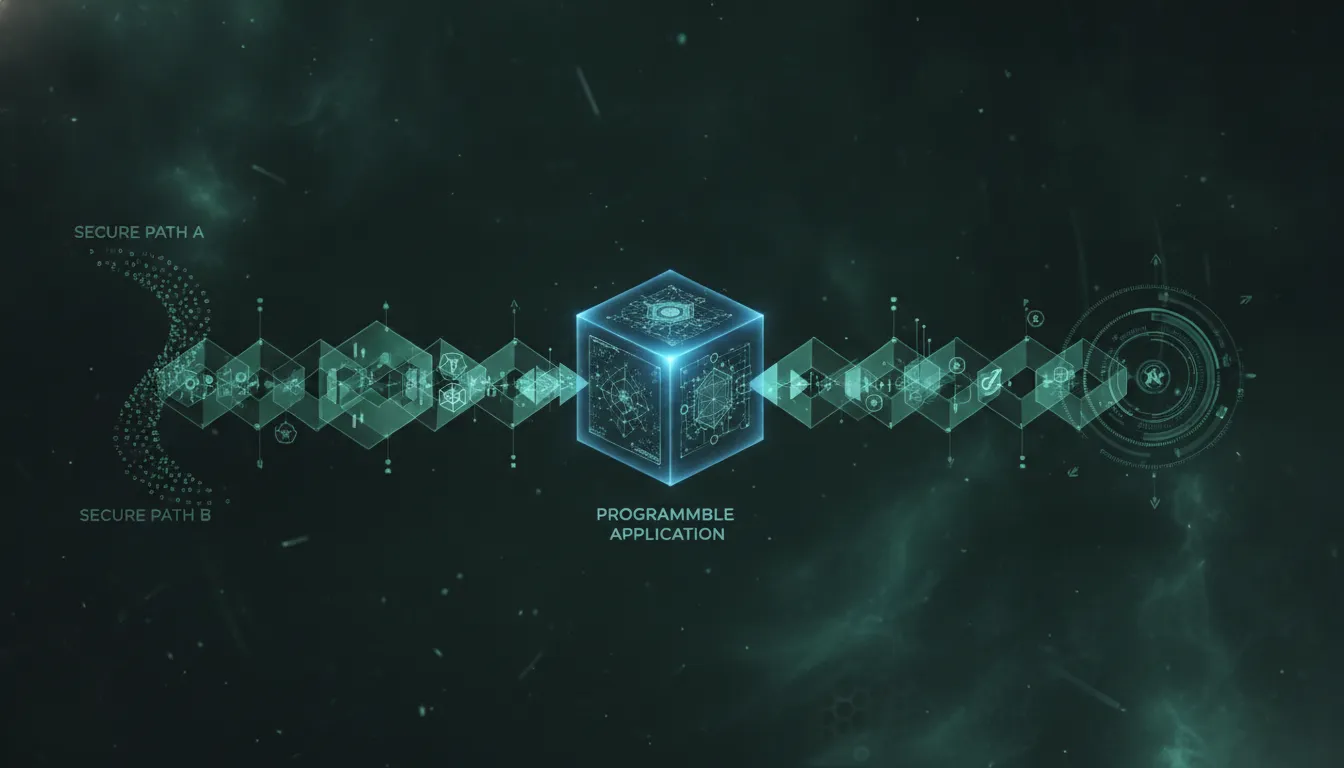
Choosing an interoperability architecture is really a choice about where your application logic, state, and security assumptions will live.
ZetaChain vs Wormhole is not a comparison between two identical tools. ZetaChain is a Layer 1 blockchain where developers can deploy Universal Apps that coordinate assets, data, and calls from connected networks through one programmable environment. Wormhole is an interoperability protocol that verifies and delivers messages between applications deployed on different networks. ZetaChain can suit teams that want unified logic and state, including native Bitcoin use cases. Wormhole can suit teams that want to keep existing deployments and add verified message delivery. The right choice depends on the application's state model, threat model, operating burden, and the steps a user must complete.
This guide turns those architectural differences into a practical decision process. It focuses on what developers need to build, secure, test, and operate rather than declaring a universal winner.
Start Building with the ZetaChain documentation
ZetaChain vs Wormhole at a glance
The fastest way to understand the difference is to ask where the core application runs. With ZetaChain, a Universal App can place its main logic and shared state on ZetaChain. Users on connected networks interact with that app through ZetaChain's connectivity layer. With Wormhole, applications generally retain contracts or services across their chosen networks and use Wormhole to carry verified messages between them.
That distinction affects far more than contract deployment. It changes how a team synchronizes state, handles failures, pays for execution, audits the system, and designs the user journey. A protocol that transports messages and a programmable Layer 1 can both enable interoperability, but they assign different jobs to the application team.
Decision area | ZetaChain | Wormhole |
|---|---|---|
Primary model | Layer 1 execution environment for Universal Apps | Verified messaging and token-transfer infrastructure |
Application logic | Can be concentrated in one Universal App | Often remains in contracts or services on each target network |
State | Can use one shared source of application state | Applications design synchronization around delivered messages |
Native Bitcoin use | Designed to support programmable interactions with native BTC | Depends on the selected Wormhole product and integrated assets |
Core security question | How ZetaChain consensus, observers, and threshold signing secure the flow | How Guardians verify and attest to messages |
Best initial test | Prototype one end-to-end Universal App flow | Prototype message production, delivery, verification, and recovery |
Neither column removes the need for careful application security. Teams still need access controls, safe upgrade processes, monitoring, rate limits, and tested recovery paths. The useful comparison is which architecture makes those responsibilities easier to reason about for a specific product.
How do the programming models differ?
A ZetaChain Universal App is a smart contract application deployed on ZetaChain. It can receive calls and assets originating from connected networks, apply shared business logic, and coordinate outcomes. This model lets a developer treat interoperability as part of the execution environment rather than building a separate messaging layer into every deployment.
That can reduce duplicated logic. For example, a lending or portfolio application may need a single view of collateral and policy rules. A shared contract can be easier to audit than several versions that must remain aligned. It can also make feature releases more consistent because the team updates the central application logic instead of coordinating many deployments.
Unified state changes the design problem
State is often the hardest part of an interoperable application. A message can arrive late, arrive after another action, or fail during downstream execution. If each network keeps its own state, the application needs rules for ordering, retries, duplicate handling, and reconciliation. These are application-level concerns even when the transport layer works as designed.
ZetaChain gives teams the option to keep important state in one programmable environment. That does not eliminate asynchronous behavior at connected-network boundaries, but it can reduce how many sources of truth the team maintains. Developers still need to define what happens while an inbound or outbound action is pending and how users recover from failure.
Message delivery preserves existing deployments
Wormhole's model can be attractive when a product already has contracts on several networks. Those contracts can emit messages, receive verified messages, and take local action. The team can preserve network-specific integrations and use Wormhole as a communication layer rather than moving the main application to a new execution environment.
This flexibility also places more design work on the application. Teams decide which contracts may send messages, how a receiving contract validates them, what ordering guarantees the app needs, and how state converges. For some mature products, that control is a benefit. For a new product seeking one shared logic layer, it can become extra operational weight.
What security assumptions should developers evaluate?
Security comparisons should begin with explicit assumptions, not labels. Every interoperable design combines protocol security with application code, administrative controls, upgrade mechanisms, relayers or operators, and connected-network behavior. A fair review maps each component and asks how a failure could affect funds, state, or availability.
ZetaChain security model
ZetaChain uses proof-of-stake consensus for its Layer 1. Validators participate in consensus, while observer components watch connected networks and report relevant events. Threshold signature schemes allow the network to control connected-network accounts without one node holding a complete private key. Economic penalties can apply to validator misconduct under the protocol's rules.
For an application team, the review should cover more than consensus. It should examine Universal App permissions, contract upgrade controls, inbound call validation, outbound action limits, and the handling of assets while an action is pending. Teams should also understand how connected-network observations become finalized actions and which events can pause or delay execution.
Wormhole security model
Wormhole uses a Guardian network to observe and attest to messages. Applications verify the resulting attestations before acting. This creates a clear integration boundary, but developers must still validate the message's emitter, source context, payload, and replay properties. Accepting a valid attestation is not the same as confirming that every requested application action is safe.
Teams evaluating Wormhole should review the current Guardian set and threshold, the product-specific verification flow, contract upgrade controls, relayer behavior, and recovery procedures. They should also determine how the application responds when delivery is delayed or a destination call reverts.
Build a threat model around the whole flow
A useful threat model traces one user action from the first signature to the final state change. Identify every contract, key, role, network, message, and off-chain service involved. Then test compromised administrators, malformed payloads, duplicate messages, delayed finality, destination reverts, price manipulation, and service outages.
Do not assume blockchain transactions are universally irreversible. Protocol-level exceptions, governance actions, upgrades, and reorganizations can affect outcomes. Likewise, do not describe all smart contracts as immutable. Upgradeable proxy patterns and privileged controls are common. Documenting these realities makes the comparison more useful and the final application safer.
How does each approach shape user experience?
Users do not experience an architecture diagram. They experience wallet prompts, wait times, gas requirements, failed actions, and balances that either make sense or do not. The best technical design is the one that supports a clear journey without hiding material risks.
Count user-visible steps
Start by counting signatures, approvals, network switches, and transactions for the most important flow. A Universal App can often present a more unified interaction because core logic and state live in one place. The exact experience still depends on the connected network, asset, wallet, and application design.
A Wormhole-based application can also offer a streamlined interface, especially when relayers and product tooling handle delivery well. However, an app with contracts and state on several networks may need more visible coordination. Developers should test the full journey instead of inferring UX from the protocol alone.
Design the pending and failure states
Interoperable actions are not always instant. Users need to know when an action is submitted, observed, verified, executed, or waiting for recovery. A generic spinner is not enough. The interface should show a status that maps to the actual system and provide a safe next step.
For ZetaChain, teams should explain when an inbound action reaches the Universal App and when an outbound action completes. For Wormhole, teams should explain message attestation, delivery, and destination execution. In either case, the product needs idempotent retry logic so a user cannot accidentally trigger the economic action twice.
Measure UX under stress
Prototype testing should include slow finality, unavailable relayers, high gas, rejected wallet prompts, and destination reverts. Record completion rate, time to completion, support requests, and recovery success. These results often reveal more than a feature checklist. They show whether the architecture can support a product people will trust.
Teams should also decide who pays each execution cost and how that is communicated. Abstracting gas can improve usability, but it creates operational and abuse-prevention requirements for the sponsor. Clear limits and monitoring are essential.
A practical evaluation process for your team
A short prototype can expose architectural tradeoffs before they become expensive. Use the same representative flow for both approaches and compare the evidence.
Define the state model. List the data that must remain consistent and identify the source of truth. Decide whether one shared state layer or network-local state better fits the product.
Map required networks and assets. Confirm current support in official documentation. Include native assets, tokens, contract calls, finality needs, and any network-specific limitations.
Write the threat model. Trace keys, roles, contracts, messages, observers, Guardians, relayers, and upgrade paths. Define loss limits and pause conditions.
Build one end-to-end flow. Use realistic contracts and a real front end. Avoid a demo that tests only a happy-path message.
Inject failures. Delay delivery, duplicate requests, revert destination calls, and interrupt services. Verify that retries are safe and the user sees an accurate status.
Measure the user journey. Count prompts, transactions, network switches, completion time, and recovery steps. Test with people who did not build the prototype.
Estimate operating work. Compare monitoring, incident response, upgrades, liquidity needs, support burden, and the number of deployments the team must maintain.
The result should be a written architecture decision record. It should name the chosen model, rejected alternatives, assumptions, measured tradeoffs, and triggers that would cause the team to revisit the decision.
When is ZetaChain the better fit?
ZetaChain is a strong fit when the product benefits from one programmable environment and shared application state. This is particularly relevant for new applications that do not want to deploy and synchronize a full set of contracts across every target network. It can also suit products that need to coordinate native assets, including native BTC, through a Universal App.
A team may prefer ZetaChain when its core business logic should be consistent for every user. One central contract can reduce version drift and make audits easier to scope. Developers can focus on the application's rules while ZetaChain provides the connectivity and execution framework.
Use cases that favor a Universal App
Applications that need one shared account, policy, or portfolio state.
Products that want programmable access to native Bitcoin alongside other connected assets.
New builds seeking to minimize duplicated contract logic.
User journeys where reducing network-specific steps is a primary product goal.
Teams that want one core environment for monitoring and upgrades.
This choice still requires careful engineering. Developers need to understand ZetaChain's connected-network model, contract interfaces, gas behavior, and failure handling. The best next step is to review the ZetaChain developer documentation and build a small flow that represents the hardest part of the intended product.
When is Wormhole the better fit?
Wormhole can be the better fit when a team intends to keep its existing contracts and state on their current networks. If the product needs verified messages or token transfers between those deployments. Adopting a messaging protocol may require less architectural change than moving core logic into a new execution layer.
This can matter for mature protocols with network-specific features, established liquidity, completed audits, or governance processes tied to existing contracts. Wormhole may let the team add communication while preserving those investments. It can also suit applications whose local components should remain independent and only exchange a limited set of messages.
Use cases that favor messaging
Existing applications adding communication between current deployments.
Products that require network-specific contracts and local state.
Teams prepared to manage message validation, ordering, retries, and reconciliation.
Integrations centered on a Wormhole product already supported by the application stack.
The team should still prototype the complete delivery path and audit receiving-contract logic. A verified message can be authentic while the requested application action is unsafe. Strict emitter checks, payload validation, replay protection, rate limits, and tested recovery procedures remain essential.
Frequently asked questions
Is ZetaChain a bridge like Wormhole?
No. ZetaChain is a Layer 1 blockchain where developers can deploy Universal Apps with shared logic and state. Wormhole is an interoperability protocol centered on verified messaging and related token-transfer products. Both can connect activity across networks, but they give the application team different programming and operating models.
Can ZetaChain Universal Apps work with native Bitcoin?
ZetaChain is designed to let Universal Apps coordinate native BTC without requiring developers to deploy a smart contract on Bitcoin. Teams should confirm current network support, interfaces, and limitations in the official documentation before designing a production flow.
Which option is more secure?
There is no useful one-word answer. ZetaChain and Wormhole use different security models, and application security also depends on contract code, permissions, upgrades, operators, relayers, and recovery controls. Build a threat model for the full user action and compare assumptions against the product's risk limits.
How should a team choose between ZetaChain and Wormhole?
Start with state. If the product benefits from one programmable environment and unified state, prototype a ZetaChain Universal App. If it must preserve network-local contracts and state, prototype Wormhole messaging. Then compare security assumptions, user steps, failure recovery, and operating work with the same real product flow.
Start building your Universal App
The best ZetaChain vs Wormhole decision comes from a working prototype, not a feature checklist. Define your state model, test the hardest user flow, inject failures, and measure the work your team must own. If one programmable environment and native asset access fit your product, use the official documentation to build the first Universal App flow.
Start Building
Categories
Related Posts
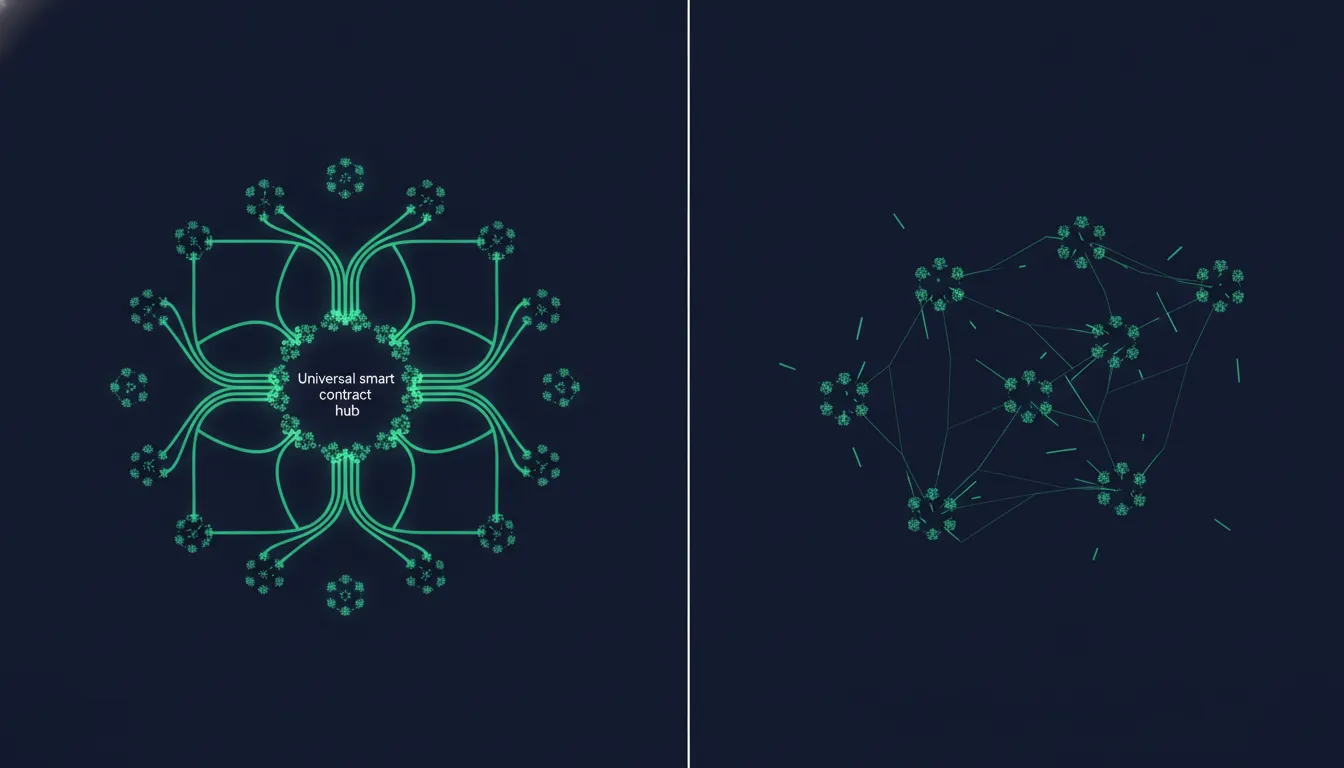
ZetaChain vs Axelar: A Developer Architecture Guide
Start building the right architecture. Compare ZetaChain vs Axelar across execution, state, security, workflows, and practical prototype decisions.

Multi Model AI Routing Without Losing Context
Start building multi model AI routing that preserves context across providers with portable memory, secure retrieval, measurable policies, and resilient...