ZetaChain vs Chainlink CCIP: Developer Guide
Jul 6, 2026
ZetaChain Team
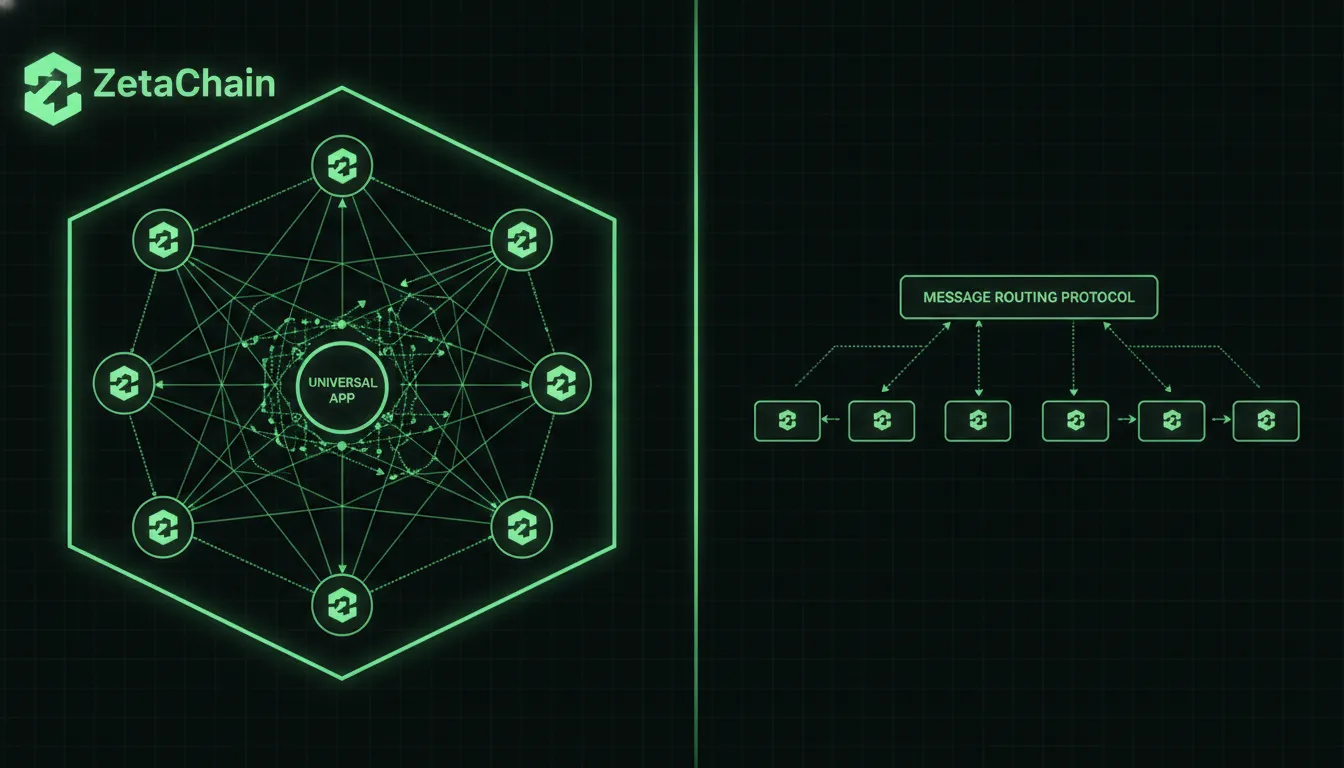
Choosing an interoperability stack requires weighing pure messaging against full application platforms.
Start Building with ZetaChain documentation to test the universal application workflow.
A zetachain vs chainlink ccip comparison reveals two distinct approaches to building across networks. Chainlink CCIP functions as a messaging and infrastructure layer that uses oracle networks to securely move data and tokens between smart contracts. In contrast, ZetaChain provides a universal Layer-1 blockchain with an application platform architecture called zEVM. This allows developers to deploy smart contracts that natively manage assets and data on both EVM and non-EVM chains like Bitcoin. While CCIP excels at high-security message passing, ZetaChain enables unified liquidity and native programmability for chains that lack their own smart contract logic. As noted in recent blockchain research, choosing between these models depends on whether a project needs a secure bridge or a sovereign execution environment for its universal applications.
ZetaChain vs Chainlink CCIP at a glance
Choosing between ZetaChain and Chainlink CCIP depends on your project goals. ZetaChain is a full platform for apps. It lets you build tools that work on many chains at once. Chainlink CCIP is a messaging tool. It helps move data and tokens from one place to another. Both help with inter-chain links but work in very different ways. Knowing these differences helps you pick the right tool for your app.
Platform versus protocol
ZetaChain acts as a universal layer for AI and Web3. It uses a virtual machine called zEVM to run smart contracts. This allows you to deploy code in one spot that reaches every linked network. You get unified and portable memory across every model, app, and agent. This makes it a sovereign memory layer for AI. It is built to help devs manage private data and money without needing new systems.
Chainlink CCIP works as a bridge for messages and data. It does not host its own apps or state. It is mainly a way to send info between chains that already exist. A uniform protocol is often needed to link different blockchain systems. CCIP provides a standard way to move tokens and facts. But it does not provide a single place to run your app's main logic.
Security and network trust
Security models vary between these two systems. ZetaChain uses a Proof-of-Stake model with over 70 validators. This provides a decentralized path for inter-chain work. It relies on a large group of nodes to keep the network safe. Chainlink CCIP relies on oracle networks to verify data. These networks act as a middle layer to watch and report on chain events. Both aim to keep your data safe during transfers.
Experts note that decentralized frameworks are vital for safe blockchain use. Risks in these systems can lead to big losses if not handled well. You can read about the ZetaChain design for inter-chain work to see how this trust works. Using a decentralized group of nodes helps reduce the risk of a single point of failure. This is key for apps that handle high value or private data.
Support for native Bitcoin
ZetaChain provides native support for the Bitcoin network. It uses TSS tech to let smart contracts manage Bitcoin directly. This means you can build apps that use BTC without using wrapped versions. It helps create unified liquidity across many chains. This is a big plus for DeFi tools that want to tap into Bitcoin's value. You can build once and reach users on both EVM and non-EVM chains.
Chainlink CCIP does not offer this native support. It focuses more on moving assets between EVM-ready chains. If you want to use Bitcoin with CCIP, you often need to use wrapped tokens. This can add extra steps and risks for your users. ZetaChain's approach is more direct. It allows for native inter-chain work that includes chains like Bitcoin and Solana from the start.
Feature | ZetaChain | Chainlink CCIP |
|---|---|---|
Core Design | Application platform (L1) | Messaging and bridge layer |
Execution | On-chain zEVM smart contracts | Off-chain oracle networks |
Native Bitcoin | Full support via TSS | No native support |
Security Model | Proof-of-Stake (70+ nodes) | Oracle-based trust |
Primary Goal | Unified app and AI memory | Secure data and token transfer |
Ideal Use Cases | AI agents and unified DeFi | Bank and token transfers |
What is the architectural difference?

Conceptual comparison: ZetaChain centralizes application execution and state on zEVM, while CCIP delivers messages between separately deployed contracts.
Platform versus protocol
ZetaChain and Chainlink CCIP serve different roles in the blockchain world. ZetaChain is an app platform. It acts as a full Layer-1 network where teams can build and run code. Chainlink CCIP is a messaging protocol. It moves data and tokens between two different chains but does not host the code itself. This is the main point when looking at zetachain vs chainlink ccip for your next project.
Because ZetaChain is a platform, it provides a place for state to live. Builders use the ZetaChain EVM (zEVM) to create smart contracts that talk to many chains at once. This setup is a unique interoperability design because it keeps the logic in one place. But CCIP requires teams to set up and manage contracts on every chain they want to use. This makes ZetaChain a true universal layer for apps.
Where business logic lives
When you use Chainlink CCIP, your app's logic is spread across many networks. You must manage how these parts talk to each other through messages. This can make your work hard as you grow and add more chains. A secure and decentralized framework is needed to make sure these messages are safe. CCIP uses an oracle network to check and move this data between separate chains.
ZetaChain changes this by letting you keep all your logic on one chain. You write your contract once on ZetaChain. Then it can control assets on Bitcoin, Ethereum, and other networks from that single spot. This creates unified liquidity since the state and assets are not split up. This model helps teams build fast without worrying about how to sync data across many spots. It acts as a sovereign memory layer for AI and web3 apps.
This single-point logic is vital for AI agents that need to store data. ZetaChain 2.0 offers a native Private Memory Layer. This lets AI apps keep a lasting state that follows the user across any model or app. Messaging protocols like CCIP are not built to hold this kind of lasting memory. They only move data from one point to another without storing it in a central, secure way.
Security and native chain support
The two systems also use different ways to keep things safe. Chainlink CCIP relies on oracle networks to secure its message transfers. ZetaChain uses an economic Proof-of-Stake model. It has over 70 validators that work together to reach a consensus on the state of the network. This model offers a strong way to reduce possible risks in a world with many chains.
One big difference is how they handle chains like Bitcoin. ZetaChain has native support for Bitcoin through a system called TSS. This lets you build apps that use real Bitcoin directly without using wrapped tokens. Chainlink CCIP is mainly for chains that already support smart contracts. For teams that want to use Bitcoin or Solana alongside Ethereum, ZetaChain offers a more direct and native path. This makes it easier to build apps that reach the widest group of users.
How should developers choose an interoperability stack?
Choosing the right tools for your app is a big task. The choice between ZetaChain vs Chainlink CCIP shifts how you manage data and assets. Both systems help chains talk, but they use different paths. Your team needs to look at your app's core needs before you pick a base. This choice will set your path for years as you grow.
Check your asset and chain needs
First, look at which networks your app must reach. If you need to use Bitcoin or Solana without a bridge, you need a system that supports them. ZetaChain provides native Bitcoin support so you can write code that works with real BTC. Other tools like Chainlink CCIP focus on moving messages between EVM chains. They do not have the same native support for non-EVM assets. You can learn more about this in our look at ZetaChain's unique interoperability architecture and how it works.
ZetaChain acts as a universal layer for your code. You can build one app that touches every chain you need. This saves time and cuts down on the work your team has to do. If your goal is to reach users on many chains, a unified system is often the best path. It helps you keep your code in one place while your app reaches out to the whole world. This is a key part of building a great user flow.
Compare the safety models
Trust is the most important part of any system that moves value. A secure and decentralized framework is a must for safe data flow. ZetaChain uses a Proof-of-Stake model with more than 70 nodes. These nodes work to keep the chain safe and open. This setup is spread out so that no single point can fail. It provides a strong base for apps that handle big assets or private data.
In contrast, Chainlink CCIP relies on its own oracle network to pass data. This system has a long track record of safe use across the space. Both models aim to stop bad actors, but they use different trust paths. You should pick the one that fits your own risk plan. A spread-out model with many nodes offers a clear and open way to check that everything is working well. This helps your team and your users sleep better at night.
Check state and memory needs
Do you want to run one contract that controls many chains, or just send a few messages? ZetaChain lets you build on its zEVM platform to manage assets on many chains at once. This creates a unified pool of funds that flows where it is needed most. Chainlink CCIP is built as a messaging layer to send data and tokens. It does not offer a place to host your whole app's logic in one spot.
If you plan to use AI, your needs will be even more clear. ZetaChain's new 2.0 layer offers a private memory space for AI apps. This is a unique feature that other tools do not have right now. It helps AI agents store data and act as interoperable networks in a safe way. To get started with these tools, you should look at the full developer docs for more help. This will show you the best way to set up your new system.
Map your asset needs. List every chain your app needs to touch and check if they are all EVM or if you need non-EVM help.
Select your state model. Decide if you want one main contract to rule every chain or if you want to sync many small pieces of code.
Verify Bitcoin support. Confirm if your app needs to hold or spend native BTC, as this needs a certain type of platform to work.
Test the cost and speed. Look at how much it costs to send data and how long those steps take for users to see.
Check for AI memory. Think about if your app will need to store private data or route to AI models as you build more features later.
Review the ZetaChain docs and prototype one end-to-end user flow before choosing your production stack.
How do the developer workflows compare?
Comparing how developers work with ZetaChain and Chainlink CCIP shows two clear paths. ZetaChain acts as a full app platform. Chainlink CCIP serves as a messaging layer. This choice shapes how teams build, test, and keep their code on many networks.
Building on the ZetaChain platform
On ZetaChain, you write smart contracts directly on its own network using zEVM. This lets you create apps that manage assets on many chains from one place. This setup, known as ZetaChain's unique interoperability architecture, means you do not need to put new code on every network you use. For example, you can build apps that work with Bitcoin even though Bitcoin has no smart contracts. This saves time and reduces the work needed to keep code in sync.
Developers use common tools like Hardhat or Foundry to write and test their contracts. Since ZetaChain is its own blockchain, you can test your logic in one space. This is faster than testing messages between many separate testnets. Standardized protocols are needed to make sure these contracts work well together. ZetaChain gives you a simple way to handle these actions without complex message passing.
Using Chainlink CCIP for messaging
Chainlink CCIP works by sending data and tokens between chains. When you use CCIP, you often keep your app's logic on each chain you want to connect. You then use the CCIP interface to send messages between them. This fits teams that want to keep logic on one chain like Ethereum. They can still reach other networks using CCIP. But this path means you must manage and secure many copies of your code.
The workflow for building interoperable applications with CCIP involves learning its messaging patterns. You must handle how messages are sent, received, and checked by oracle networks. This adds a layer of detail to your code. You also need to manage gas costs on both the start and end chains. CCIP tries to make this easy with its gas system, but it still needs careful planning to avoid failed trades.
Monitoring and maintenance trade-offs
Monitoring your app on ZetaChain is like watching any other Layer-1 network. You check the status of your contracts and your unified liquidity. Because everything happens in one place, it is easier to track the steps of a user's action. A secure and decentralized framework helps ensure that these actions are processed well. You do not need to wait for messages to pass through many middle steps to see the final result.
With Chainlink CCIP, monitoring is harder because you must watch many chains at once. You need to check that a message sent from one chain arrived and worked on the next one. If a failure occurs, finding where it happened takes more effort. You also have to track the status of the oracle networks that secure your messages. This setup means you must update and patch contracts on every chain. This can increase the risk of errors over time.
ZetaChain provides a single place to write and run code for all chains.
Chainlink CCIP acts as a bridge for data and tokens between existing apps.
ZetaChain supports non-EVM networks like Bitcoin natively.
CCIP requires managing code on every chain you want to use.
How do the security models differ?
ZetaChain uses a Proof-of-Stake system to protect the network. This setup relies on 70+ nodes to check and confirm every move. Each node must stake tokens to join. If a node tries to cheat, it loses its stake. This creates a strong link between safety and money. A secure and shared system helps make sure these moves stay valid across other networks.
Economic Proof-of-Stake vs oracle networks
Chainlink CCIP takes another path for its safety. It uses a network of oracles to send data. These oracles have a long track record of keeping funds safe. But they rely on their own group of nodes to check data. ZetaChain acts as a full blockchain. It handles all safety on its own Layer-1. This means the trust stays within a single, shared group of nodes. Both models work well, but they ask users to trust other parts of the tech stack.
Validation and trust assumptions
Trust is key in any inter-chain setup. When you use ZetaChain's unique design, you get a single source of truth. The chain itself checks every move. You do not need an outside party to pass your data. This model is built for the sovereign memory layer for AI. It keeps all data in one place so it stays safe and easy to find. CCIP uses a second network to watch for risks. This group looks for odd moves and stops them if they look wrong.
How they handle finality and speed
ZetaChain offers fast speed for all moves. Once a move is done on ZetaChain, the state is changed for all linked apps. CCIP depends on the speed of the source and target chains. This can add wait times for users. Builders using CCIP must account for these delays. On the other hand, the universal layer approach lets apps react to data as soon as the block is signed. This speed is vital for apps that need fast data flow, such as AI agents using shared memory.
Developer security duties
Builders have to think about their own tasks too. ZetaChain lets you write code that runs in one spot. You do not have to manage data on many chains at once. This makes it easier to keep your app safe. It reduces the spots where bugs can hide. CCIP is a sending tool. You must make sure your messages reach their target. You also have to handle what happens if a chain stops working. Using a universal layer helps you build fast with fewer risks to manage.
Builders also have to look at rate limits and controls. CCIP has built-in limits on how much value can move at once. This helps stop large thefts if a bug is found. ZetaChain lets you set your own rules within your smart contracts. Since you build on a full Layer-1, you have total control over how your app behaves. You can build custom safety checks that fit your exact needs. This choice is part of why ZetaChain is seen as a universal layer for AI and Web3. It gives you the tools to build safe, complex apps that can scale across the whole network.
When is ZetaChain the better fit?
Choosing between ZetaChain and Chainlink CCIP depends on the goals of your project. Chainlink CCIP works well for simple data and token transfers between networks. But many teams find that ZetaChain is the better choice when they need a full platform to build and run apps. It provides a layer for logic that can reach every linked network at once.
Projects needing one state
Builders who want to manage a single state across many networks should choose ZetaChain. With its universal layer, you only need to deploy your smart contracts once. This move removes the need to keep up other versions of your code on every network you support. It makes it easy to control assets and data because everything stays in sync in one place.
Using a joining protocol helps teams build apps that work well across other chains. This one model is a key part of ZetaChain's unique interoperability architecture. It allows you to build a single hub for your users. They can work with your app from any wallet without moving their funds to a new chain first.
Native Bitcoin and non-EVM apps
If your project needs to use native Bitcoin, ZetaChain is the best fit. It is the only major platform that allows you to write smart contracts that control Bitcoin. You do not need to use wrapped assets or complex bridges that add risk. This native support also extends to other networks like Solana, which gives you a wider reach than link tools.
A spread out framework is vital for making these inter-chain actions safe. ZetaChain uses a network of over 70 nodes to secure these tasks. This model ensures that your app can talk to non-EVM chains while keeping a high level of safety. It is a strong tool for builders who want to tap into the large pool of Bitcoin users.
AI and private memory solutions
Teams building AI tools should look at ZetaChain for its private memory layer. This feature allows you to store and manage data that stays private and easy to move. Most other networks only focus on moving tokens, but ZetaChain acts as a memory layer for models and agents. It helps you build apps that can learn and remember across other places.
You can use the AI Portal to route tasks to other models based on what your app needs. This system makes it easy to add AI features to your blockchain tools. It gives you a way to sell your models while keeping control of the data. This focus on memory and AI makes it a unique fit for the next wave of smart apps.
Explore the ZetaChain ecosystem to see how builders apply universal application architecture.
Frequently Asked Questions
What is the architectural difference between ZetaChain and Chainlink CCIP?
ZetaChain is a Layer-1 app platform that hosts smart contracts and stores state. This allows builders to keep business logic in one place while connecting to other networks. Chainlink CCIP is a messaging protocol that moves data and tokens between different spots. According to Chainlink, CCIP is mainly a tool for base layer work and data transfer. ZetaChain provides a unified spot for code, while CCIP requires teams to manage code on every connected chain.
How does Chainlink CCIP secure data transfers between networks?
Chainlink CCIP uses decentralized oracle networks to verify and move messages between different chains. This system checks that each message is valid before it reaches the final destination. A study in the National Library of Medicine notes that protocols rely on different security models like validator sets or oracles. CCIP focuses on secure data and token transfers using its proven oracle setup. This helps protect the integrity of the data as it moves through the decentralized web.
Can developers build apps on ZetaChain that connect to many blockchains?
Yes, developers can use ZetaChain to build apps that connect to many networks from a single point. This is possible through the ZetaChain EVM, which allows for unified logic and data. According to ZetaChain, the platform enables native support for chains like Bitcoin and Solana. This setup helps teams build apps that reach users on different blockchains without needing wrapped assets. It creates a sovereign memory layer for AI that works across the whole network.
What are the trade-offs between ZetaChain and Chainlink CCIP for developers?
Developers choose between these tools based on where they want to keep their logic. ZetaChain allows teams to build apps with a single state that connects to many chains. This reduces the need to manage many contracts on different networks. Chainlink CCIP is a strong choice for simple data moves but requires more work to sync state. As noted by ZetaChain, its platform helps developers build apps with native AI and memory features. This unified approach can save time during the build process.
Ready to Start Building on the sovereign memory layer?
Choosing a tech stack is a big step that defines how fast your team can ship and grow in the next few years. If you wait to choose your path, you will waste months on code that does not scale or work with new tools. This delay lets your rivals get a head start while you stay stuck with old systems that fail as the market moves. By starting on a sovereign memory layer today, you save time and reach more users through a single, unified app layer. The cost of doing nothing is a loss of speed that your project may never get back in this fast tech world. Use a system that handles private memory and works for all models and agents to keep your project on the right track. You can read more about ZetaChain's unique interoperability architecture to learn how it works.
Start Building with the documentation and validate your architecture in code.
Categories
Related Posts
Universal Blockchain for Humans and AI: The ZetaClient Upgrade
ZetaChain’s latest ZetaClient upgrade introduces single-transaction multi-deposits, faster cross-chain execution, and improved interoperability, moving the Universal Blockchain closer to ~2-second block times and enabling powerful AI-driven multi-chain workflows.
Super Aggregator: A New Unified Liquidity Layer Powered by ZetaChain
TL;DR: ZetaChain’s Universal Smart Contracts allow Dapps to instantly connect to all chains connected to ZetaChain. Allowing for new possibilities like super aggregators and the unification of liquidity across blockchains